
[Warning: The following contains spoilers for Netflix’s Pluto, particularly Episode One]
When I started Pluto, Netflix’s recent anime adaptation of Naoki Urusawa’s manga by the same name, I went in totally blind. I knew that it was a more mature retelling of Astro Boy’s “Greatest Robot on Earth” storyline, but as I’d never really gotten into Astro Boy, the story presented in Pluto was completely new to me. From the little I knew of the premise, I expected robot battles, neo-noir intrigue, and a thrilling whodunnit. I got all of that and more, as over the course of eight densely-packed episodes, Pluto evolves from just a futuristic murder mystery into a brilliant, sincere, and empathetic meditation on the nature of humanity, the destructive cycle of violence, and the futility of revenge.
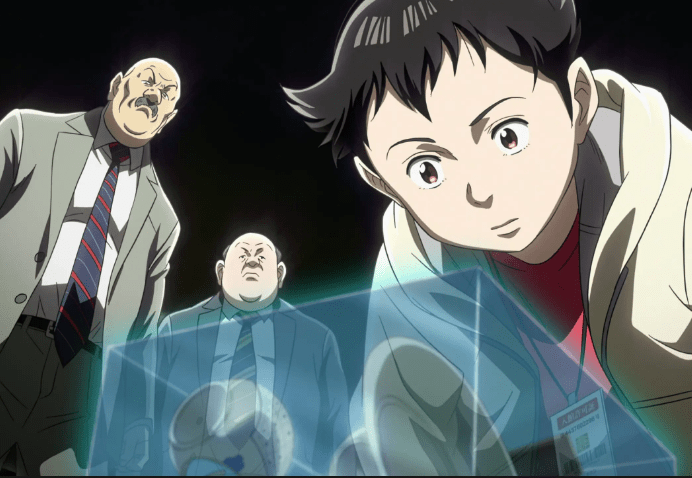
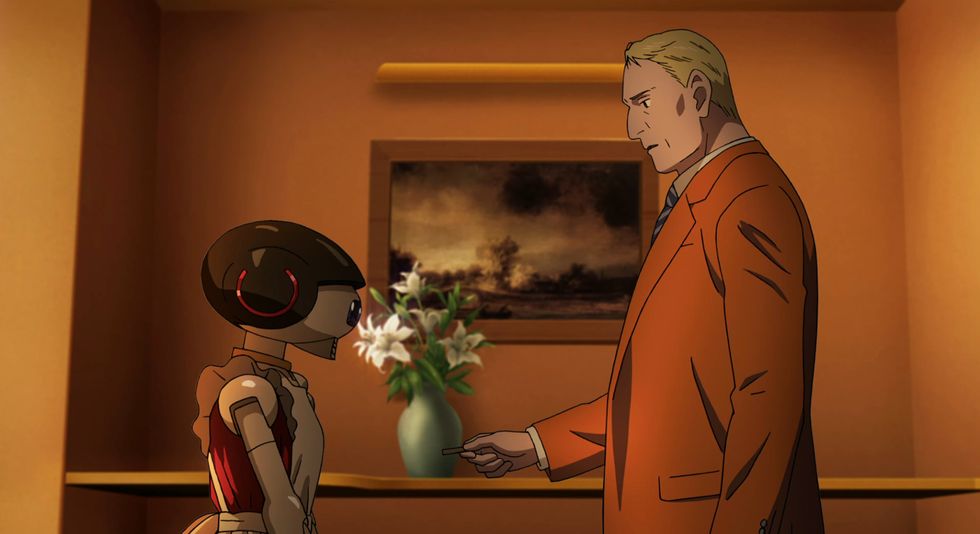
Set in a technologically-advanced future where robots have gained civil rights after years of oppression, while still being subject to some level of marginalization by their human counterparts, Pluto kicks off with the homicide of Mont Blanc, a former peace-keeper turned beloved environmental advocate. Mont Blanc is also a superpowered robot who could rival the Iron Giant in size and power, making his total obliteration as perplexing as it is tragic. Soon after, robot-rights proponent Bernard Lanke is also found dead in his high-rise apartment. Clearly murdered by Mont Blanc’s killer, both victims were marked with a pair of objects placed around their heads in a fashion resembling a stag beetle’s horns. Only a robot could have pulled off these hits without leaving a trace- but by design, robots are prohibited from killing humans, and the only one known to have committed murder prior to this point, the near-omniscient Brau1589, was regarded as an anomaly.
It soon becomes clear that an ultra-powerful robotic serial killer is intent on bumping off the world’s seven most advanced robots, as well as key human players integral to advancing both the field of robotics and robot civil rights. Gesicht, a humanoid detective-bot working for Europol, is both the case’s primary investigator and one of the robots on the killer’s hit list. In his efforts to stop the killer in time, he teams up with the serial killer’s other robot targets, including Atom (known around the world as Astro Boy). As the mystery behind the murders is revealed, it becomes clear that both the killer(s) and their victims are trapped in a futile cycle of violence and revenge, building up to one final devastating act of vengeance that threatens to swallow the world whole.
I would be remiss describing Pluto as just a murder mystery. As the protagonists’ numbers dwindle and the identity and motivation of their killers is slowly untangled, the plot becomes less about solving a straightforward murder case and more a meditation on what it means to be human. Reflections on the humanity of artificial lifeforms are a commonly-explored theme throughout sci-fi from I, Robot, to Blade Runner and beyond.
However, Pluto doesn’t feel like a tired retread when it explores these themes. The lives of the robot victims are explored in depth, more so than most of their human counterparts. While many humans in-universe still believe that robots only mimic human emotions, it becomes apparent that these AI characters are fully emotionally-realized, possessing the ability to both love and hate just as intensely as humans. Many of them also have friends, families, and admirers (both human and robotic) who are left devastated when their loved ones are picked off one by one.
And, just like humans, they are also flawed.
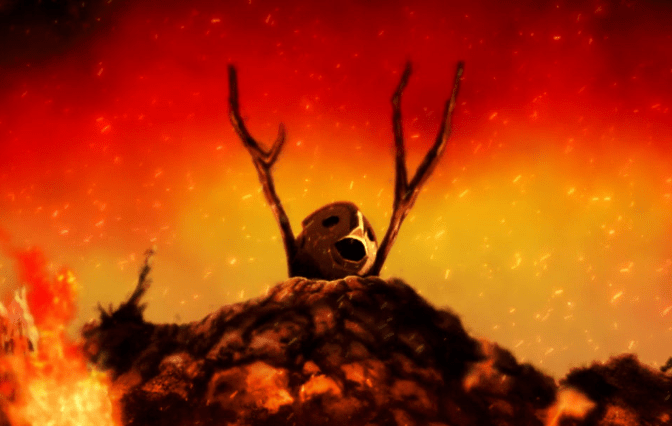

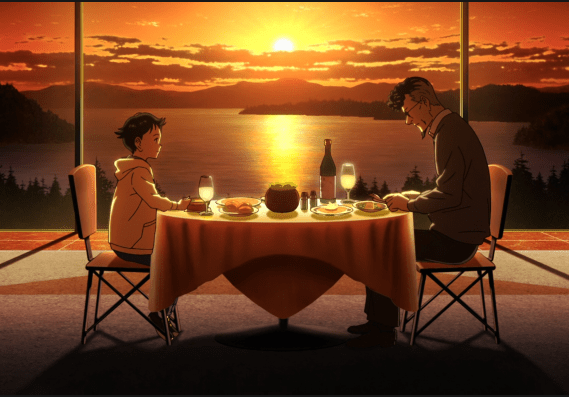

All seven robot protagonists were in some way involved to one extent or another with the 39th Persian War, a contentious and bloody conflict in the Middle East kicked off by the Kingdom of Thracia (a fictional country that totally isn’t the US) over concerns that the Kingdom of Persia possessed weapons of mass destruction (sound familiar?). Even as they try- some desperately- to leave the war and their participation in it behind, the robots’ connection, however tangential, to the unjust and brutal war marks them guilty in their killer’s eyes.
The robots aren’t spotless, innocent martyrs whose deaths are meant only to wring out pity tears from the audience for a cheap emotional catharsis. They are as morally and emotionally complex as any human being, making the impact of their deaths all the more emotionally devastating, both to their in-universe loved ones and the anime’s viewers.
While the plot is engaging, it’s by no means perfect. The original Pluto manga ran for nearly 6 years, and the anime tries to condense that plot into 8 hour-long episodes. This occasionally leads to characters and plot ideas being introduced in less-than-skillful ways. Case in point: one antagonist is hinted at through brief, cryptic scenes throughout the show up until the last episode, where it is abruptly revealed that he’s been intricately involved with the plot this whole time, all without this character’s name ever even coming up. I eventually had to Google who this was, and it turns out that this character, Doctor Roosevelt, was much more developed in the manga. For someone already familiar with the source material, this last-minute inclusion probably wouldn’t come off that strange. For someone like myself who went in unfamiliar with the manga (as I imagine most of the audience will be), the choice was jarring.
Still, if you can handle some occasional rough edges around the periphery of an otherwise captivating story, the show is well worth the watch. Like its characters, Pluto is messy and heartfelt, imperfect but sincere, and ultimately, very easy to fully invest yourself in. Beautifully animated, empathetically written, and engaging till the last second, I would rank Pluto among the best of Netflix’s original anime.

Like what you read and saw here? Keep up for Indie Music, Gaming, and Culture here, and Follow us at our Social Media! Click in for our Instagram, Facebook, Twitter (X), Twitch (we broadcast weekly), and YouTube!

 Entertainment + Culture Coverage of Independent Media from CLT & Beyond
Leave a comment